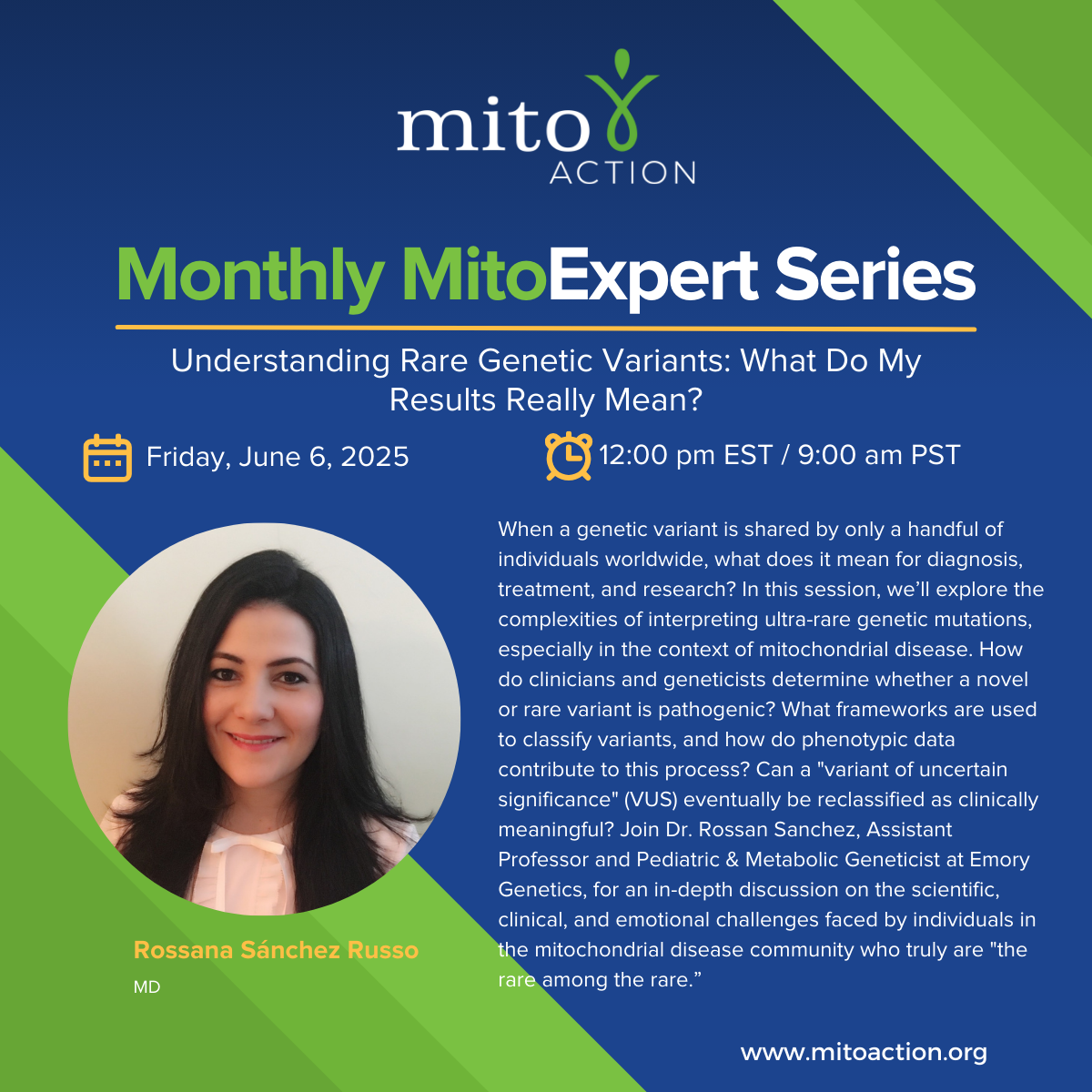
When a genetic variant is shared by only a handful of individuals worldwide, what does it mean for diagnosis, treatment, and research? In this session, we’ll explore the complexities of interpreting ultra-rare genetic mutations, especially in the context of mitochondrial disease. How do clinicians and geneticists determine whether a novel or rare variant is pathogenic? What frameworks are used to classify variants, and how do phenotypic data contribute to this process? Can a “variant of uncertain significance” (VUS) eventually be reclassified as clinically meaningful? Join Dr. Rossana Sanchez, Assistant Professor and Pediatric & Metabolic Geneticist at Emory Genetics, for an in-depth discussion on the scientific, clinical, and emotional challenges faced by individuals in the mitochondrial disease community who truly are “the rare among the rare.”

Dr. Marcus Favero speaking on Psychiatric Disorders, Medications & Mitochondrial Disease Depression, schizophrenia, bipolar disease, and other psychiatric diseases - what is the connection...
The annual town hall meeting is MitoAction’s way of kicking off the new year by sharing all that we have in store for the...
The MitoAction committee chairs met by conference call to discuss the exciting ideas and projects ahead for 2008.